

When you’re shipping 50 orders a day out of a back room, fulfillment is manageable. When you hit 500, you need help. Picking the wrong ecommerce fulfillment service costs you in refund requests, bad reviews, and customers who don’t come back.
The problem isn’t a shortage of options. There are hundreds of 3PL companies offering ecommerce fulfillment services across the U.S. The problem is that they don’t all perform the same, their pricing structures vary wildly, and the wrong fit can slow you down more than doing it yourself.
Phoenix Warehouse has been running ecommerce fulfillment operations out of Jersey City, NJ since 1997. Over 29 years we’ve seen businesses thrive after switching to a 3PL and we’ve seen businesses switch back because they picked the wrong one. This guide covers the seven things that actually separate a good ecommerce fulfillment partner from one that’s going to create more problems than it solves.
Why Ecommerce Fulfillment Is Different from Standard Warehousing
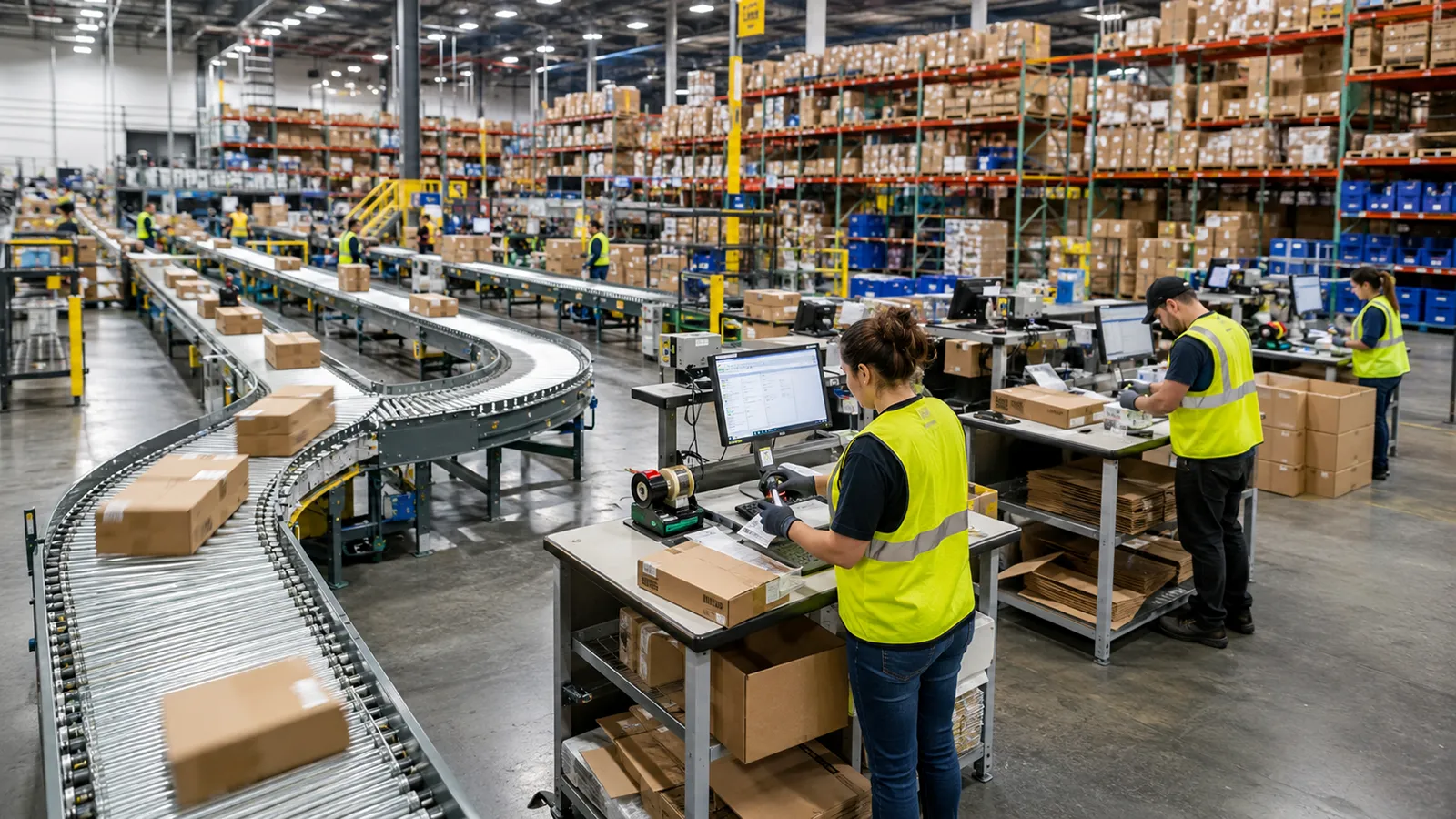
Ecommerce fulfillment is a different operation from standard bulk warehousing. It’s high-volume, time-sensitive, and accuracy-dependent in a way that B2B pallet moves are not.
In standard warehousing, you’re moving pallets. A shipment goes out once a week to a retailer. If one case is slightly off, the retailer catches it on receipt and you fix it on the next order. The margin for error is higher because the feedback loop is slower.
In ecommerce fulfillment, you’re moving individual units (sometimes thousands per day) directly to end customers. A wrong item doesn’t get caught at a receiving dock; it lands at someone’s house, triggers a return, generates a negative review, and costs you the lifetime value of that customer. The feedback loop is immediate and public.
This means ecommerce fulfillment specifically requires:
Scan-to-confirm picking. Every item should be scanned at pick to verify it matches the order. Manual pick-and-pack without scan verification is how errors happen at scale.
Platform integration. Orders from Shopify, WooCommerce, Amazon, or any other channel need to flow into the warehouse management system automatically. Manual order entry at any step introduces errors and delays.
Same-day processing. Customers who buy online expect fast shipping. A fulfillment center that batches orders and ships next day is already behind the standard most e-commerce businesses need to compete.
Returns management. In ecommerce, return rates run 15-30% depending on category. A 3PL that doesn’t have a clear returns process is going to create a backlog that affects your available inventory and your customer experience.
7 Things to Check Before Choosing an Ecommerce Fulfillment Service
1. Order Accuracy Rate
The single most important metric for ecommerce fulfillment is documented order accuracy: the percentage of orders shipped correctly the first time.
The industry benchmark is 99.5%. That sounds high, but at 500 orders per day a 99.5% rate means 2-3 mis-ships every single day. At scale, that’s hundreds of returns and refunds per year.
Phoenix Warehouse maintains a 99.96% order accuracy rate across all ecommerce clients. That’s verified, not estimated. It’s tracked through our Synapse WMS across every order processed.
When evaluating a fulfillment company, ask for their documented accuracy rate. Ask how it’s measured. If they can’t give you a specific number backed by data, that’s a red flag. “We’re very accurate” is not an answer.
2. Platform Integrations
Your ecommerce fulfillment service needs a direct, automated connection to every channel you sell on: Shopify, WooCommerce, Amazon, eBay, or wherever your orders come from.
The connection should be two-way: orders flow in automatically when a customer buys, and tracking numbers flow back automatically when the order ships. No manual exports, no CSV uploads, no human in the middle copying order numbers from one system to another.
Ask specifically:
- Which platforms do you integrate with natively?
- Is there an extra fee per integration or per channel?
- How long does integration setup take?
- What happens when there’s a sync error, and how is it caught and fixed?
Phoenix Warehouse integrates with Shopify, WooCommerce, Amazon, eBay, BigCommerce, and major ERP systems through Synapse WMS. Most clients are fully integrated within two weeks of onboarding. EDI connections for retail channels (Target, Walmart, and others) are also supported.
3. Pricing Transparency
Ecommerce fulfillment pricing has more line items than most businesses expect. The gap between the quoted rate and the actual monthly bill is where most 3PL relationships go wrong.
A typical 3PL invoice includes: receiving fees, storage fees, pick fees per order, item fees per unit, packaging material costs, carrier charges, return processing fees, and sometimes account minimums or special handling surcharges. Each of those line items can vary significantly between providers.
What to ask for upfront:
- A full written fee schedule, not just pick-and-pack rates
- Storage pricing by pallet, bin, and cubic foot
- How packaging materials are billed
- Whether there are peak season surcharges (Q4 especially)
- What the monthly minimum is and what triggers it
- How returns are billed
Phoenix Warehouse provides a complete fee breakdown in every quote. No line items are held back until the first invoice. If something in a competitor’s quote looks unusually cheap, ask what’s not included.
4. Location and Shipping Zones
Where your ecommerce fulfillment center is located directly affects how fast orders reach customers and how much you pay per shipment.
Carriers calculate shipping rates by zone. The further a package travels, the more it costs and the longer it takes. A fulfillment center in the center of the U.S. gives you balanced zone distribution nationally. A fulfillment center in New Jersey gives you a significant advantage if a large portion of your customers are in the Northeast.
New Jersey specifically sits within one-day ground delivery reach of over 50 million people, the densest population corridor in the country, covering New York, Philadelphia, Boston, and everything in between. For brands whose customers skew Northeast, shipping from Jersey City cuts both cost and transit time compared to fulfillment from the Midwest or Southeast.
Phoenix Warehouse is located at 201 Port Jersey Blvd in Jersey City, NJ, minutes from Port Newark-Elizabeth, with direct access to I-78, the New Jersey Turnpike, and NYNJ rail. If you’re importing goods and fulfilling orders from the same region, this location eliminates a separate trucking leg between port and warehouse.
5. Warehouse Management System (WMS)
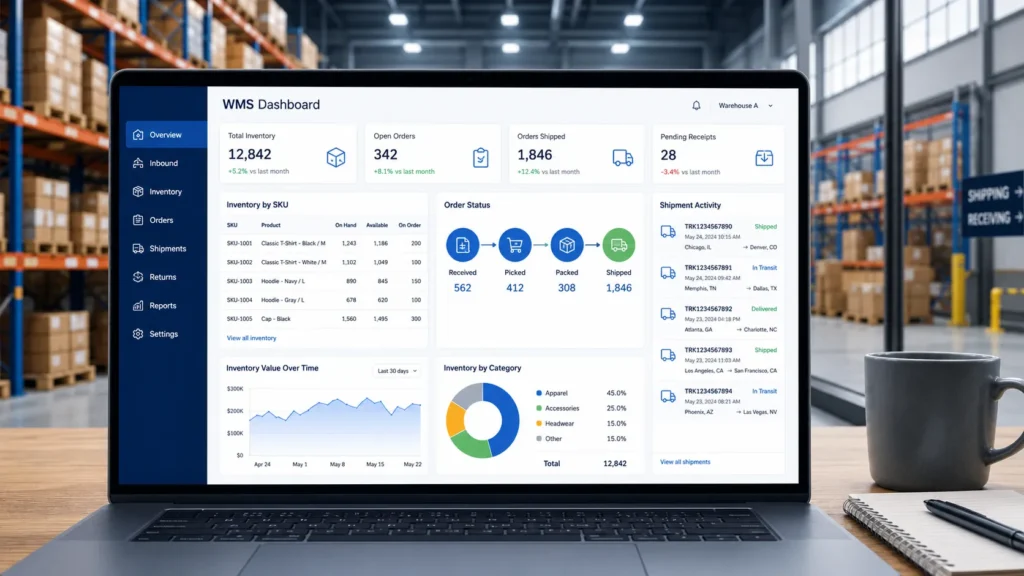
A good warehouse management system is what separates a 3PL that gives you real-time visibility from one that makes you email to find out how many units you have left.
At minimum, your fulfillment partner’s WMS should give you:
- Live inventory counts by SKU and location
- Order status in real time (received, picked, packed, shipped)
- Tracking number visibility as soon as a label is created
- Returns reporting: what came back, why, and what happened to it
- Low-stock alerts so you can replenish before you run out
Phoenix Warehouse runs Synapse WMS, a system built specifically for 3PL operations. Clients get their own login and can see inventory, orders, returns, and reporting at any time without contacting the warehouse. That level of visibility matters when you’re managing a live ecommerce business and need to make decisions quickly.
Ask any prospective 3PL if you can see a demo of their client portal before you sign. If there’s no client portal, or the interface looks like it was built in 2005, ask how you’re supposed to monitor your inventory.
6. Returns Handling
Returns processing is one of the most overlooked factors when choosing an ecommerce fulfillment service, and one of the most costly when it’s handled badly.
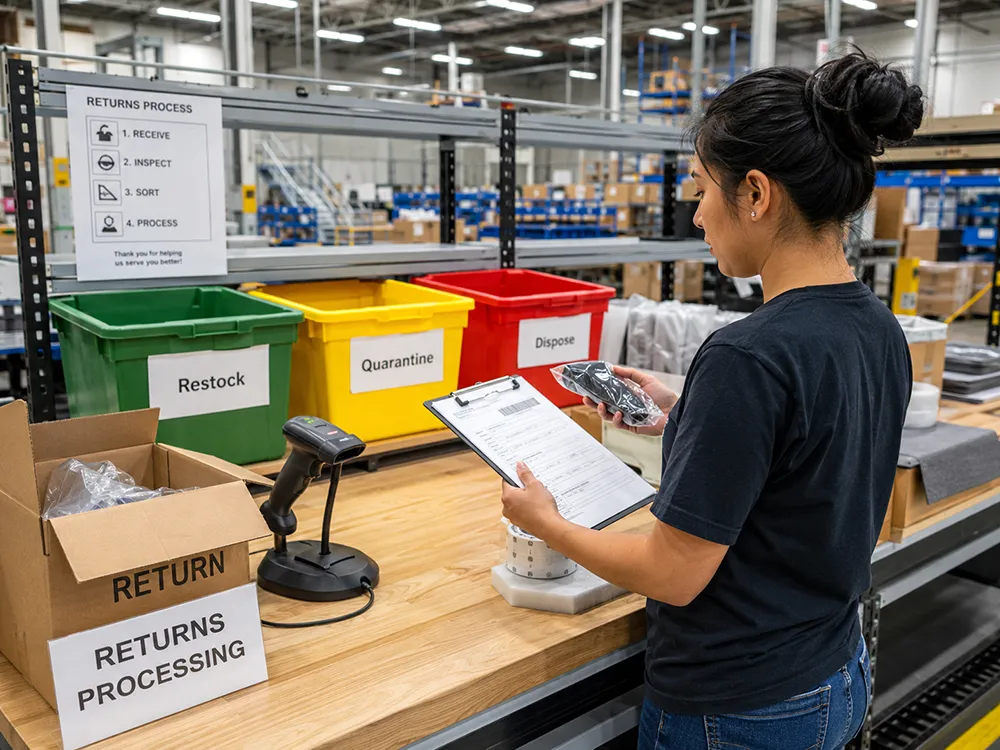
In a well-run ecommerce fulfillment operation, returns follow a defined process: the return arrives, it’s scanned in against the original order, it’s inspected against a client-defined checklist (is it sellable? damaged? missing parts?), and it’s either restocked, quarantined, or dispositioned, all within a defined timeframe, with a record attached.
When returns aren’t managed this way, you end up with:
- Inventory counts that don’t match reality (units in “returns limbo” not showing as available)
- Sellable goods sitting in a returns pile for weeks
- No visibility into why products are coming back
Ask prospective 3PLs specifically: what is your returns SLA? How long from receipt to inspection? How are inspection results reported back to clients? What happens to items flagged as unsellable?
Phoenix Warehouse handles returns for all ecommerce clients as part of standard operations, received, inspected, and reported within 48 hours in most cases.
7. Scalability
The right ecommerce fulfillment partner can handle double your current volume without asking you to sign a new contract or wait six months for more space.
This matters most in two scenarios: planned growth and unplanned spikes. If your brand is growing 30% year over year, your 3PL needs to grow with you: more storage, more pick capacity, more staff during peak periods. If you land a big retail account or your product goes viral, you need a partner who can absorb that surge without blowing your SLAs.
Questions to ask about scalability:
- What’s your current spare capacity? Could you handle 2x my volume today?
- How do you staff up for Q4? Do you use temp agencies?
- If I add a new sales channel, how long does it take to go live?
- Is there a contract length or minimum commitment?
Phoenix Warehouse operates 1,000,000 sq ft in Jersey City, one of the largest independent 3PL facilities in the New York/New Jersey metro area. We handle peak season volume for over 450 clients across e-commerce, retail, and B2B distribution without long-term contract lock-ins.
Red Flags to Watch Out For
Not every warning sign is obvious in a sales conversation. Here’s what to look for:
No documented accuracy rate. If a 3PL can’t give you a specific, verified order accuracy percentage, they’re either not tracking it or the number is bad.
Vague answers about integrations. “We can connect to most platforms” is not the same as “we have a native Shopify integration that’s live in two weeks.”
Long-term contracts with steep exit penalties. A confident 3PL doesn’t need to lock you in for 24 months. Month-to-month or short-term arrangements are normal for established providers.
No client portal. If you have to email or call to find out your inventory count, that operation is running on spreadsheets somewhere.
Unclear peak season process. If they can’t clearly explain how they staff and scale for Q4, assume they’ll struggle when it matters most.
Hidden fees that surface on the first invoice. Ask specifically about dimensional weight charges, special handling fees, minimum monthly charges, and fuel surcharges before you commit.
Questions to Ask a 3PL Before You Sign
Use these in any sales conversation or RFP process:
- What is your documented order accuracy rate for ecommerce clients, and how is it measured?
- Which platforms do you integrate with natively? What does setup look like?
- Can I see a demo of your client portal?
- What is your complete fee schedule, including all line items?
- What are your peak season processes? How do you handle Q4 volume spikes?
- What is your returns SLA? How long from receipt to inspection and reporting?
- What is the contract length and what are the exit terms?
- How do you handle a mis-ship or a client complaint?
A 3PL that handles these questions confidently and transparently is one worth continuing the conversation with. Evasive answers to any of these, especially accuracy rate and fee schedule, are a sign to keep looking.
What Good Ecommerce Fulfillment Actually Looks Like
Here’s what a well-run order lifecycle looks like at Phoenix Warehouse:
A customer places an order on Shopify at 10am. The order syncs automatically into Synapse WMS within minutes. A picker is directed to the exact bin location by the WMS. No paper pick lists, no guessing. Each item is scanned at pick to confirm it matches the order. The order is packed using client-specified packaging, with any inserts or custom materials included. A shipping label is generated, the carrier picks it up, and tracking is pushed back to the Shopify order, all before the same-day cutoff.
The customer sees tracking that afternoon. No emails to the warehouse asking “where is my order.” No manual intervention at any step.
That’s the standard. Any ecommerce fulfillment service you evaluate should be able to describe their process in this level of detail. If they can’t, the process probably doesn’t exist at that level.
Frequently Asked Questions
What’s the difference between a fulfillment center and a warehouse?
A fulfillment center is set up specifically for picking, packing, and shipping individual orders, typically for ecommerce. A warehouse focuses on bulk storage. Many 3PLs like Phoenix Warehouse combine both under one roof, which means you can handle ecommerce orders, wholesale orders, and retail replenishment from the same facility in Jersey City, NJ.
How much does ecommerce fulfillment cost?
It varies by volume, SKU count, order size, and packaging. Most 3PLs charge separately for receiving, storage, pick and pack, and shipping. At Phoenix Warehouse, we provide custom quotes based on your actual order profile. A business shipping 200 units per day pays differently from one shipping 2,000. There’s no accurate generic answer without running your actual numbers.
Can a 3PL handle Shopify and Amazon orders at the same time?
Yes. This is called multichannel fulfillment. Phoenix Warehouse handles Shopify, Amazon, WooCommerce, and other channels simultaneously through Synapse WMS, with inventory allocated correctly across all channels in real time.
How long does it take to set up with a new ecommerce fulfillment service?
Typically 2-4 weeks for full onboarding: platform integration, inventory transfer and receiving, packaging setup, and process configuration. Phoenix Warehouse targets 2 weeks for most new ecommerce clients.
What order volume do I need to justify a 3PL?
A common threshold is 100-200 orders per day, or when fulfillment is consuming 20+ hours of staff time per week. Below that, the economics often don’t work because of monthly minimums. Above it, outsourcing almost always saves money and time compared to running it in-house.
Is New Jersey a good location for ecommerce fulfillment?
Yes, particularly for brands whose customers are concentrated in the Northeast. A fulfillment center in Jersey City puts you within one-day ground delivery reach of New York, Philadelphia, Boston, and the surrounding metro areas, covering over 50 million people. Phoenix Warehouse at 201 Port Jersey Blvd is also minutes from Port Newark, which is useful for brands importing goods and fulfilling from the same region.
Looking for Ecommerce Fulfillment Services in New Jersey?
Phoenix Warehouse is a full-service ecommerce fulfillment center in Jersey City, NJ, operating since 1997, serving over 450 businesses, with a 99.96% order accuracy rate. We handle Shopify, WooCommerce, Amazon, and multichannel fulfillment from our 1,000,000 sq ft facility near Port Newark.
No long-term contracts. Transparent pricing. A dedicated account team, not a call center.
Get a custom ecommerce fulfillment quote from Phoenix Warehouse
Also in this series: