
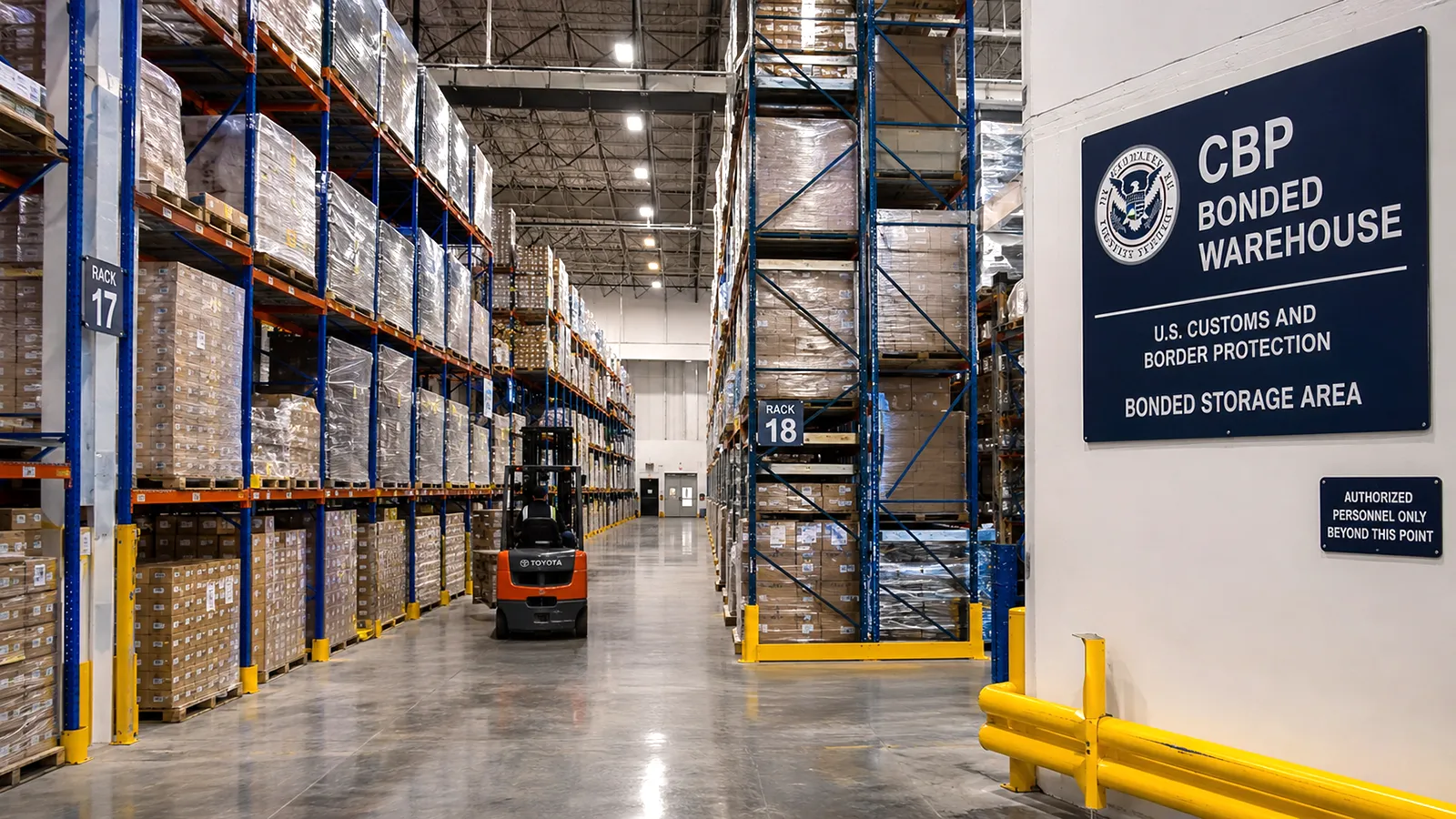

Most importers don’t pay customs duties the moment their container arrives at port. They move their goods into a bonded warehouse first, and that gives them options.
You can hold inventory without paying duties until you’re ready to sell it. You can re-export goods without paying U.S. duties at all. You can split a large shipment and release it gradually as orders come in. All of that is possible with a bonded warehouse that most businesses importing into the U.S. never use, usually because they don’t fully understand how it works.
This post covers exactly that: what a bonded warehouse is, how the process works step by step, who actually benefits from it, and what to look for when choosing one near a major port like Newark.
If you’re importing goods through Port Newark and paying full duties on arrival every time, there’s a good chance you’re leaving money on the table.
What Is a Bonded Warehouse?
A bonded warehouse is a CBP-approved facility where imported goods can be stored without paying U.S. customs duties until those goods are released into U.S. commerce. Importers use bonded warehouses to defer (and in some cases eliminate) duty payments on goods they’re not yet ready to sell domestically.
The word “bonded” refers to the customs bond, a financial guarantee held by the warehouse operator that CBP uses to ensure duties will eventually be collected. The warehouse operator (not the importer) holds this bond and is responsible for maintaining CBP compliance. At Phoenix Warehouse in Jersey City, NJ, our CBP bond is active and current, covering all bonded goods stored at our 201 Port Jersey Blvd facility.
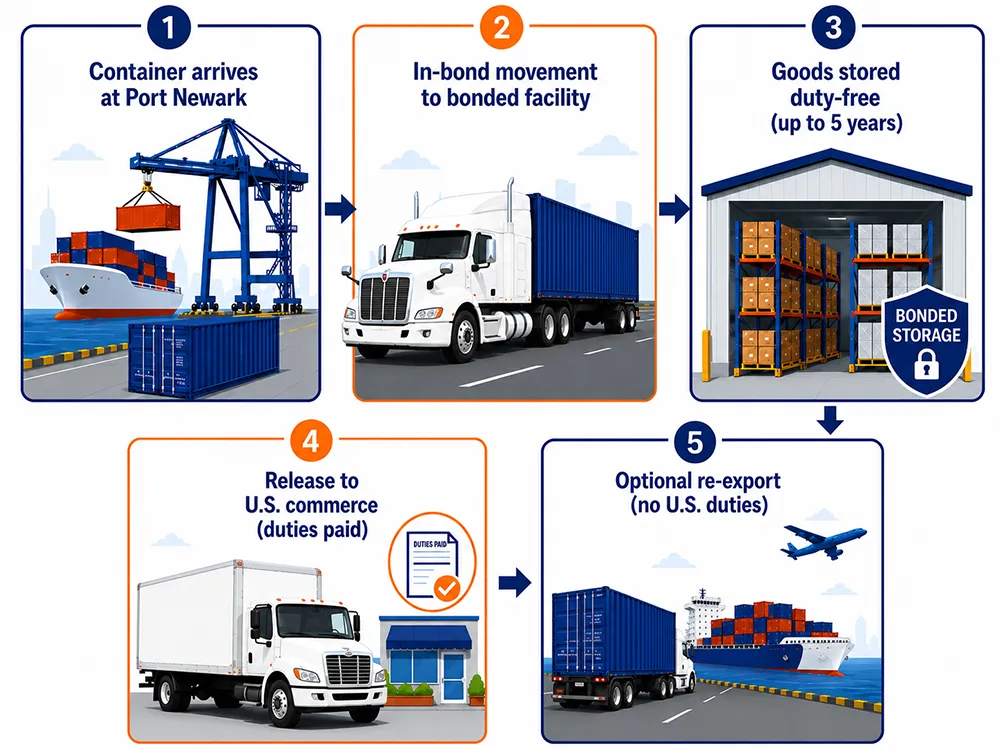
Goods can stay in a bonded warehouse for up to five years from the date of import. During that time, no duties are owed. Once goods are released for sale in the U.S., duties are paid at that point. If goods are re-exported without ever entering U.S. commerce, no U.S. duties are paid at all.
That’s the core benefit: duty deferral and, in some cases, duty elimination.
How a Bonded Warehouse Works: Step by Step
Step 1: Goods Arrive at Port
Your container arrives at Port Newark or another U.S. port of entry. Instead of going through full customs clearance immediately, the goods are transported directly to a CBP-approved bonded facility under a customs bond. No duties are paid at this stage.
The transport from port to the bonded facility happens under what’s called an “in-bond” movement. CBP authorizes the move and the goods remain under customs control the entire time. A customs broker typically handles the paperwork for this transfer. If your bonded warehouse is close to the port (as Phoenix is), this leg is short, fast, and inexpensive.
Step 2: Goods Are Stored Under CBP Authorization
Your inventory is received, logged, and stored at the bonded warehouse. The facility tracks the goods under CBP requirements: quantity, condition, and bond status are all maintained in the warehouse management system. At Phoenix Warehouse, this is handled through Synapse WMS, which gives you real-time visibility into your bonded inventory.
The clock starts from the date of import. You have up to five years before a decision has to be made.
Step 3: Goods Are Released, Re-Exported, or Manipulated
When you’re ready to move your inventory, you have three options:
Release into U.S. commerce. You pay the applicable customs duties at this point, and the goods can be shipped to your customers or retail partners. You can release inventory in batches. Pay duties only on what you’re actually moving, not the whole shipment upfront.
Re-export. If you’re sending goods to another country, you can export them directly from the bonded warehouse without ever paying U.S. import duties. This is particularly useful for businesses that use the U.S. as a transshipment point or for testing whether a product sells before committing to the U.S. market.
Manipulate the goods. While in the bonded warehouse, you can repackage, relabel, sort, and consolidate goods. You can’t manufacture or substantially transform products (that’s more of a Foreign Trade Zone function), but basic value-added work is permitted.
Who Uses Bonded Warehouses?
Importers Managing Cash Flow
Paying duties on a full container the moment it arrives ties up working capital, sometimes for weeks or months before the goods actually sell. A bonded warehouse lets you defer that payment until you’re closer to generating revenue from the inventory.
For a business importing $500,000 worth of goods with a 10% duty rate, that’s $50,000 in cash flow that stays in your account longer.
Businesses Testing the U.S. Market
If you’re bringing a product into the U.S. for the first time and aren’t sure how well it’ll sell, bonded storage lets you hold inventory without committing to full duty payment upfront. If the product doesn’t move, you can re-export without the U.S. duty liability.
Importers Who Re-Export Part of Their Inventory
Some importers sell into multiple markets. Part of a shipment goes into the U.S., part gets forwarded to Canada, Europe, or elsewhere. With bonded storage, the re-exported portion never triggers U.S. duties. You only pay duties on what actually enters U.S. commerce.
Wholesalers and Distributors with Large Inbound Shipments
If you’re bringing in full containers and distributing to multiple buyers over time, bonded storage lets you pay duties gradually as you release inventory to each buyer, rather than all at once on arrival.
Seasonal Importers
Businesses that import heavily before peak season (holiday goods, summer products, back-to-school merchandise) often bring in inventory months before it sells. Bonded storage means you’re not paying duties in August on goods that won’t generate revenue until November. You pay when you release the inventory, which lines up much better with your cash cycle.
How Bonded Warehouse Duties Actually Work
A common point of confusion: who actually calculates and pays the duties when goods are released?
When you’re ready to release inventory into U.S. commerce, your customs broker files an entry with CBP. That entry includes the classification (HTS code) of the goods and the declared value. CBP calculates the duty owed based on those figures, and you pay at that point, not when the goods first arrived.
One practical implication: if duty rates change between when your goods arrive and when you release them, you pay at the rate in effect at the time of entry, not the rate at time of import. This can work in your favor (if rates drop) or against you (if they increase). For most importers the flexibility still outweighs the rate risk, but it’s worth knowing.
Your customs broker handles the entry filing; the bonded warehouse provides the documentation showing the goods were stored in compliance with CBP requirements throughout the bonded period.
Common Mistakes Importers Make with Bonded Storage
Not confirming the facility’s CBP bond is active. A warehouse can have had bonded status in the past and let it lapse. Always ask for proof of current CBP authorization before storing goods. At Phoenix, our CBP bond is maintained and current. We can confirm this directly.
Choosing a bonded facility that’s too far from the port. Every mile between Port Newark and your bonded warehouse costs money. Drayage runs by the mile and by the hour. A facility that’s 45 minutes inland might save a few dollars on storage rates but lose it all on the extra trucking leg. Proximity to the port is one of the most underrated factors in total landed cost.
Not tracking the five-year clock. Goods don’t stay in bonded status indefinitely. CBP requires a decision within five years of the import date. Most importers won’t hit that limit, but for slow-moving inventory it’s worth monitoring. A good WMS flags bonded goods approaching the deadline.
Treating bonded storage as separate from fulfillment. Some importers use one facility for bonded storage and a different one for fulfillment, which means double handling every time goods are released to commerce. The most efficient setup is a single facility that handles both. You store bonded, release to commerce, and ship from the same building. That’s how Phoenix operates, and it cuts both cost and lead time.
Forgetting about manipulation opportunities. A lot of importers don’t realize they can do value-added work on goods while they’re still in bonded status: repackaging for retail, relabeling, resorting. Doing that work before releasing to commerce (and before paying duties) means you’re adding value without adding to the dutiable cost. Worth discussing with your customs broker.
Bonded Warehouse vs. Foreign Trade Zone: What’s the Difference?
Both bonded warehouses and Foreign Trade Zones (FTZs) defer customs duties, but they work differently and serve different business needs. For most importers in New Jersey, a bonded warehouse near Port Newark is the simpler and faster option. Here’s the practical difference:
Bonded warehouses are simpler and faster to use. Any importer can use a CBP-approved bonded facility without any formal activation or application process on their end. The warehouse operator holds the bond; you just need to work with a bonded facility.
Foreign Trade Zones are designated geographic areas where goods can be imported, stored, manufactured, and re-exported under special customs procedures. FTZs are better suited for manufacturers. If you’re importing components, transforming them into a finished product, and exporting the result, you pay duty on the finished product value (which may be lower than the component value). Setting up FTZ status requires a formal application and ongoing compliance requirements.
For most importers, wholesalers, and distributors, a bonded warehouse is the practical choice. FTZs make sense when you’re doing significant manufacturing or assembly in the U.S.
5 Benefits of Using a Bonded Warehouse
1. Defer duty payment and improve cash flow.
You don’t pay duties until goods are released into U.S. commerce. On large import orders, that deferral can represent significant working capital.
2. Re-export goods duty-free.
Goods that leave the U.S. without entering commerce never trigger U.S. import duties. For businesses with multi-market distribution, this can be a meaningful cost saving.
3. Release inventory in batches.
Instead of paying duties on a full container on day one, you can release and pay duties incrementally as orders come in or as buyers take delivery.
4. Reduce risk on large import orders.
If a shipment has quality issues or demand changes, you have time to inspect, re-export, or disposition goods before committing to full duty payment.
5. Combine bonded storage with fulfillment under one roof.
The most efficient setup is a bonded warehouse that also runs full 3PL operations. Your goods come in from port, get stored bonded, and ship directly to customers or retail partners. No double-handling, no second truck move. That’s exactly how Phoenix Warehouse operates at our Jersey City facility.
What to Look for in a Bonded Warehouse Near Port Newark
CBP approval. The facility must hold an active CBP bond. Ask for confirmation. Not every warehouse that claims to be “bonded” is current on their CBP authorization.
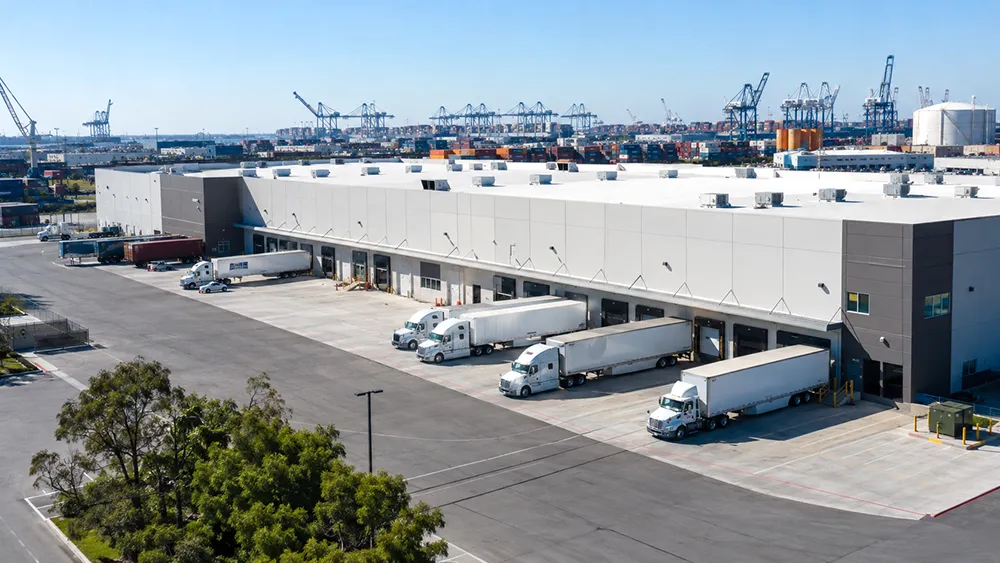
Port proximity. A bonded warehouse near Port Newark cuts drayage costs significantly. Moving a container from port to a bonded facility inland adds cost and time. Phoenix Warehouse is located minutes from Port Newark at 201 Port Jersey Blvd, one of the closest bonded 3PL facilities to the port.
Fulfillment capabilities in the same building. If you need to ship orders after clearing customs, having fulfillment in the same facility eliminates a second move. Phoenix handles bonded storage, order fulfillment, retail distribution, and value-added services all under one roof.
Real-time inventory visibility. You need to know exactly what’s in bonded status, what’s been released, and what’s been re-exported. Synapse WMS gives Phoenix clients a live view of their inventory at all times, including bonded status tracking.
EDI and retail compliance experience. If you’re distributing to major retailers after clearing customs, your 3PL needs to handle EDI transaction sets and retail compliance requirements. Phoenix works with major retail EDI programs including Walmart, Target, and others.
Experience with your product category. Bonded goods come in all types: consumer electronics, apparel, food-grade products, health and beauty, industrial components. Make sure the facility has handled your type of goods before. Phoenix is FDA registered and USDA compliant, which means we’re set up for health, beauty, and food-adjacent products alongside general merchandise.
A customs broker relationship. Your bonded warehouse isn’t a customs broker. They’re two separate functions. But a good bonded 3PL will have established working relationships with customs brokers and can make introductions if you don’t already have one. The smoother that handoff, the faster your goods move.
Frequently Asked Questions
How long can goods stay in a bonded warehouse?
Up to five years from the date of import. After that, CBP requires the goods to be exported, destroyed, or have duties paid.
Can I do anything to goods while they’re in a bonded warehouse?
Yes. You can repackage, relabel, sort, consolidate, and perform other manipulation. You generally cannot manufacture or substantially transform goods in a bonded warehouse. That requires Foreign Trade Zone status.
Is a bonded warehouse the same as a customs warehouse?
“Customs bonded warehouse” and “bonded warehouse” refer to the same CBP-authorized facility type. You’ll also see the term “Class 9 bonded warehouse” which is the CBP classification for general bonded warehouse facilities.
Do bonded warehouses cost more than regular warehousing?
Storage rates at bonded facilities are generally comparable to standard warehousing. The bond itself is a cost carried by the warehouse operator. You may see a small administrative fee for bonded goods tracking, but it’s typically modest relative to the duty deferral benefit.
Can I use a bonded warehouse if I’m also doing domestic fulfillment?
Yes, and it’s often the most efficient setup. You hold imported inventory in bonded status, release it to commerce as orders come in, and ship directly from the same facility. Phoenix handles this for importers who are also running active e-commerce and B2B fulfillment operations.
Does Phoenix Warehouse handle both bonded storage and fulfillment?
Yes. Our facility at 201 Port Jersey Blvd is CBP bonded and operates as a full 3PL, so you can receive from port, store bonded, release to commerce, and ship to customers or retailers all from the same building.
Looking for a CBP Bonded Warehouse Near Port Newark?
Phoenix Warehouse handles bonded storage, inventory management, and fulfillment from our 1,000,000 sq ft facility in Jersey City, NJ, minutes from Port Newark. We’ve been running 3PL operations since 1997 and currently serve over 450 businesses across e-commerce, retail, manufacturing, and import distribution.
Our facility is CBP bonded, FDA registered, USDA compliant, and NYNJ rail-accessible, which means your containers can move from port to our facility faster and at lower cost than most alternatives in the region.
Get a quote from Phoenix Warehouse and we’ll walk through how bonded storage fits into your import operation.
Also in this series: