
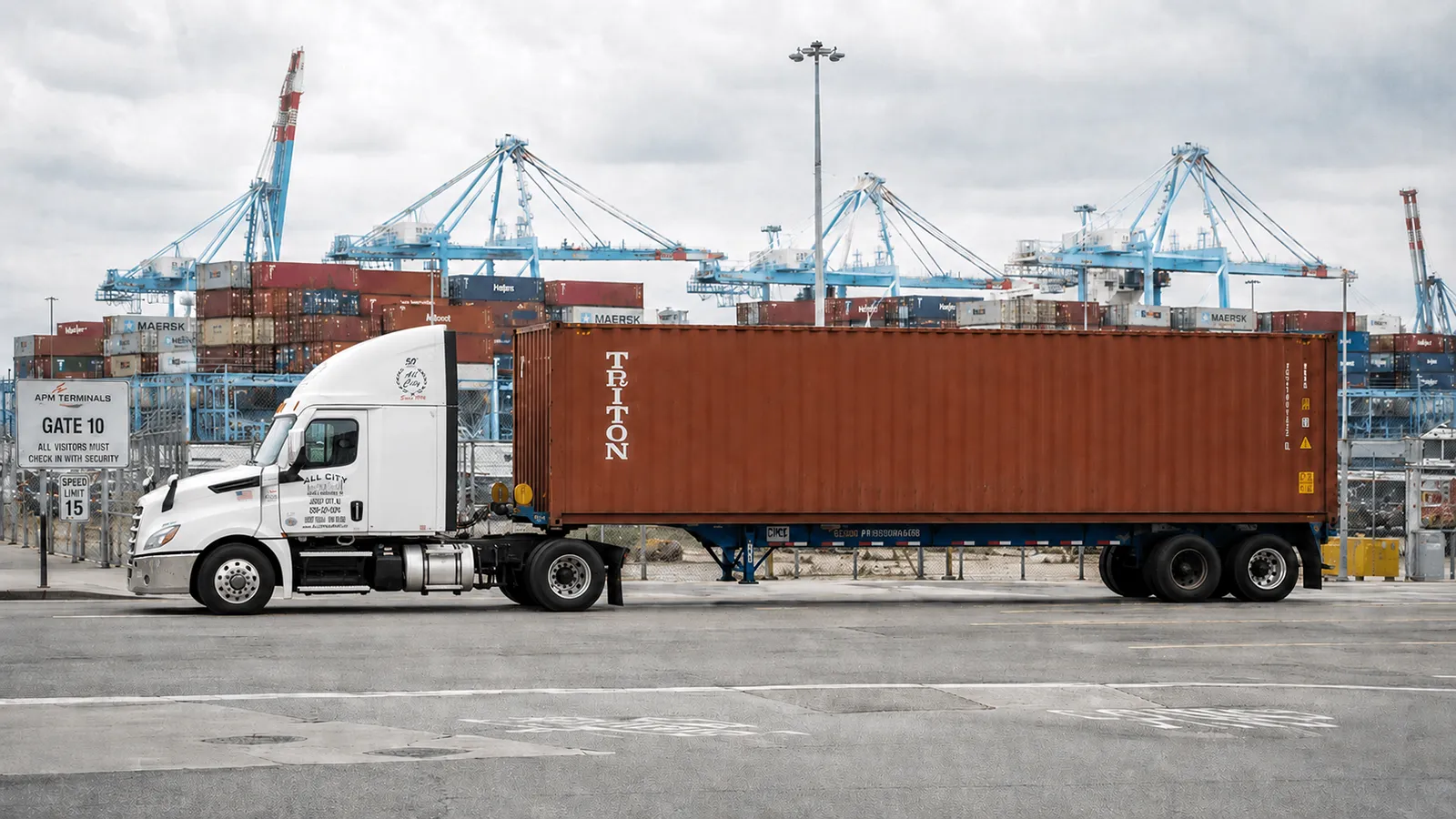

Drayage is the short-distance trucking move that carries a shipping container from a port, rail yard, or intermodal terminal to its next destination, typically a warehouse or distribution center. It’s one of the most time-sensitive and cost-variable legs in the import supply chain, and most importers don’t pay enough attention to it until something goes wrong.
If your goods arrive at Port Newark and your warehouse is 45 minutes away, that’s a drayage move. If you’re pulling a container from a rail depot in Newark to a 3PL in Jersey City, that’s drayage too. It’s a short haul, sometimes just a few miles, but the cost, timing, and carrier reliability make a real difference in how smoothly your supply chain runs.
This post covers what drayage is, how it’s priced, what can go wrong, and why your warehouse location relative to the port is one of the most underrated decisions in logistics.
What Does Drayage Mean?
The word “drayage” comes from the old English “dray,” meaning a low, flat cart used to haul heavy loads short distances. Today it refers specifically to the short-haul container move that bridges port or rail terminals with the rest of the distribution network.
Drayage is the link between ocean freight and domestic logistics. Your supplier loads goods into a container in China. That container crosses the ocean, arrives at Port Newark, gets offloaded by crane onto a chassis, and then needs to travel the last few miles to your warehouse. That last move from port to warehouse is drayage.
Without it, your goods sit at the port. The port only gives you a certain number of free days before detention charges start accumulating. Getting your container out fast, and into a warehouse where goods can be received, inspected, and processed, is how you keep landed costs under control.
Types of Drayage
Not every drayage move is the same. Here are the main types you’ll encounter:
Port drayage: The most common type. A container moves from a marine port (like Port Newark-Elizabeth) to a warehouse or distribution center. This is what most importers mean when they talk about drayage.
Intermodal drayage: A container moves between a rail terminal and a warehouse or port. If your goods come by train rather than direct port delivery, you need an intermodal drayage carrier to pick up the container at the rail depot.
Intra-terminal drayage: Movement within a port complex, shifting containers from one part of the terminal to another, or from ship to the container yard. This happens at the port level and isn’t something importers arrange directly.
Expedited drayage: Rush moves with tighter delivery windows. Costs more, but critical when you’re running against port free days or have a time-sensitive shipment.
Shuttle drayage: Moving containers between two facilities, for example from a staging area to a warehouse when direct delivery isn’t possible. Less common but useful for large-volume importers.
How Drayage Pricing Works
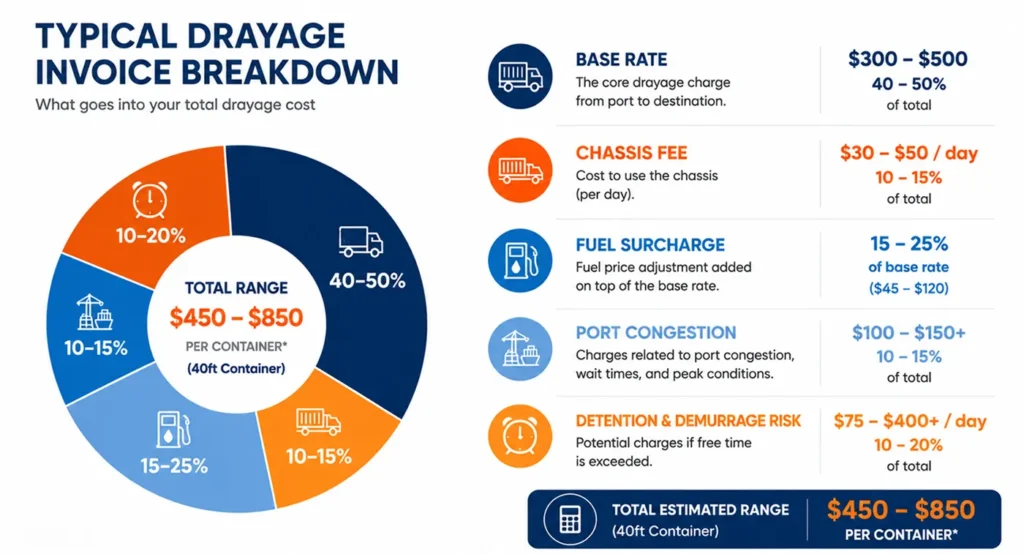
Drayage costs are calculated based on distance, chassis fees, port congestion, and wait time at the terminal, not just mileage. This is why two companies importing through the same port can pay very different drayage rates depending on where their warehouse is and how smoothly their container moves.
Here’s what goes into a drayage invoice:
Base rate: The core trucking charge from port to destination, calculated per container (20ft or 40ft). The closer your warehouse to the port, the lower this is.
Chassis fee: The container needs a chassis (the wheeled frame the container sits on) to be transported by truck. Chassis are either owned by the carrier, rented from a chassis pool at the port, or provided by the steamship line. You pay for chassis usage, typically per day.
Port congestion surcharge: When port terminals are busy (which at Port Newark is often), trucks wait longer to pick up containers. That wait time gets billed. During peak import seasons this can add meaningful cost.
Fuel surcharge: Almost every carrier adds a fuel surcharge, usually a percentage of the base rate that fluctuates with diesel prices.
Detention and demurrage: If your container sits at the port beyond the free days your steamship line allows, you pay demurrage (port storage fees) and potentially detention (if the chassis is held at your facility longer than allowed). These fees can be significant: $150 to $400+ per day depending on the carrier.
Overweight charges: If your container exceeds road weight limits, the carrier may need a permit or special routing, which adds cost.
A realistic range: For a standard 40ft container from Port Newark to a warehouse in Jersey City, drayage typically runs $300 to $600 depending on chassis, fuel, and terminal conditions. Move that warehouse 30 miles inland and the same move can cost $800 to $1,200 or more.
Why Drayage Distance Matters More Than Most Importers Realize
Every mile between Port Newark and your warehouse adds cost, time, and risk to every single container you import. This is a fixed, recurring cost. If you import 50 containers a year, you’re paying that distance penalty 50 times.
Here’s what proximity actually saves you:
Lower base drayage rates. A warehouse minutes from Port Newark pays less per move than one 30 to 40 miles inland. At 50 containers per year, the difference between a $400 drayage move and an $800 drayage move is $20,000 annually.
Less detention exposure. The longer a container is in transit or waiting, the more exposure you have to detention fees. A short drayage move means faster container return to the terminal, reducing chassis and detention risk.
Faster receiving. A container that moves from port to warehouse in 45 minutes gets received, checked in, and processed the same day. One that travels two hours sits overnight, delaying your inventory by a full day or more during busy periods.
Flexibility on short notice. When a container arrives earlier than expected or needs emergency routing, proximity gives you options. A nearby warehouse can absorb a same-day delivery. A distant one cannot.
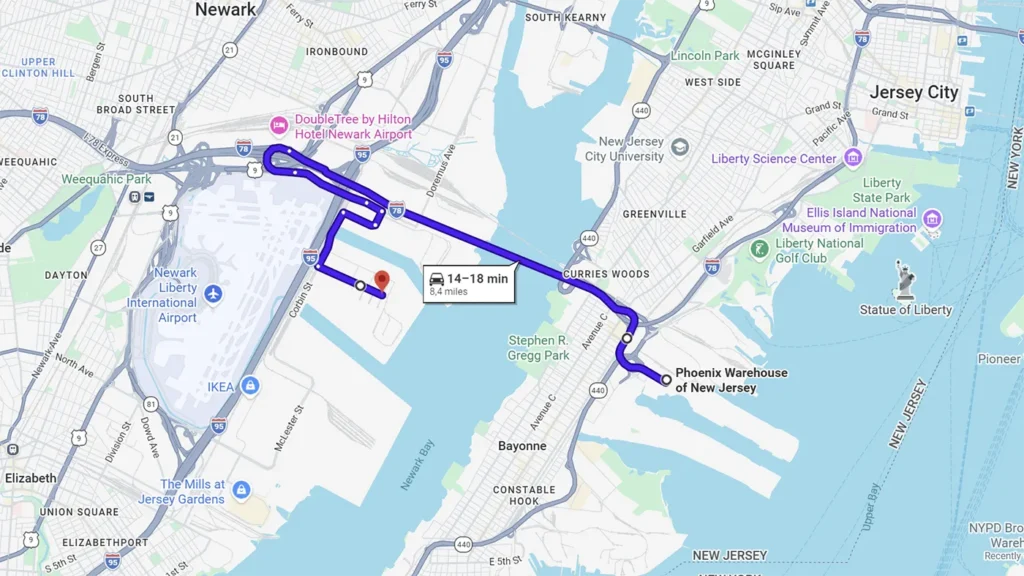
Phoenix Warehouse is located at 201 Port Jersey Blvd, Jersey City, NJ 07305, one of the closest 3PL facilities to Port Newark-Elizabeth Marine Terminal. Containers move from port to our dock in minutes. Our 100-truck fleet through All City Leasing and Warehousing handles drayage directly, which means one call covers both the move and the receiving.
Drayage and the Free Day Clock
The moment your container is available for pickup at the port, a clock starts. Your steamship line gives you a set number of free days, typically 3 to 5, before demurrage charges begin. Miss that window and you’re paying daily storage fees at the port, which can escalate fast during peak periods.
Getting a drayage carrier to pick up your container promptly is how you protect those free days. The process looks like this:
- Your customs broker files entry and the container is released by CBP
- You contact your drayage carrier (or your 3PL does it on your behalf) to schedule pickup
- The carrier picks up the container from the terminal (an appointment is often required)
- The container is transported to your warehouse
- Goods are unloaded and the empty container is returned to the port or chassis pool
Steps 2 through 5 need to happen within your free days. A 3PL with in-house drayage capability can compress this significantly: one phone call, one relationship, one operation.
Common Drayage Problems and How to Avoid Them
Terminal congestion delays. Port Newark gets congested, especially during peak import seasons. Trucks queue for hours waiting for container pickup appointments. A carrier with strong terminal relationships and appointment access handles this better than one scrambling for slots.
Chassis shortages. Chassis availability at major ports comes and goes. A carrier with their own chassis fleet, or priority access through a chassis pool, doesn’t leave you waiting while the chassis situation sorts itself out.
Missed free days. If your customs clearance is delayed or your drayage carrier isn’t scheduled quickly, you burn through your free days and start accruing demurrage. Stay on top of your ETAs and have your carrier lined up before the container arrives.
Overweight containers. Loaded containers from overseas sometimes exceed road weight limits. Your drayage carrier needs to know the container weight in advance to plan routing and obtain permits if needed. Surprises delay the move and add cost.
Warehouse receiving bottlenecks. If your warehouse isn’t ready to receive when the container arrives (dock doors backed up, receiving hours too narrow) the driver waits and detention fees clock up. A 3PL with dedicated receiving staff and flexible dock hours eliminates this.
Drayage vs. Freight: What’s the Difference?
People use “freight” and “drayage” interchangeably, but they mean different things in supply chain logistics.
Freight refers broadly to goods being transported, or to the long-haul transportation of those goods: ocean freight, air freight, rail freight. It’s the main leg of your shipment.
Drayage is the short-haul, local move that connects your freight leg to the next step in the chain: port to warehouse, rail yard to distribution center, warehouse to port for exports.
Think of it this way: your goods travel by ocean freight across the Pacific. Then drayage moves them from the ship to your 3PL. Then freight (UPS, FedEx, LTL) moves outbound orders to customers. Drayage is the connector, not the main event. But when it fails, the whole chain backs up.
Frequently Asked Questions
What does drayage cost?
It varies by distance, container size, chassis fees, and port conditions. A standard 40ft container from Port Newark to a warehouse in Jersey City typically runs $300 to $600. The further the destination, the higher the base rate, plus chassis and fuel surcharges on top.
How long does a drayage move take?
For a short-haul move like Port Newark to Jersey City, the physical transit is under an hour. Total time from container availability to warehouse receipt depends on terminal appointment availability, customs clearance, and warehouse receiving capacity. Often same-day if everything is lined up.
What are drayage free days?
Free days are the number of days your steamship line allows before charging storage (demurrage) for a container sitting at the port. Typically 3 to 5 days. Once you exceed free days, daily fees apply, ranging from $75 to $400+ per day depending on the carrier and terminal.
Is drayage included in my freight quote?
Usually not. Ocean freight quotes cover port to port. Drayage, the move from the port to your warehouse, is arranged and billed separately. Always confirm what’s included in any freight quote before assuming drayage is covered.
What’s the difference between drayage and intermodal?
Intermodal refers to using multiple modes of transport (ship + rail + truck) for a shipment. Drayage is the trucking leg that connects intermodal transport points, for example moving a container from a rail terminal to a warehouse. Intermodal is the strategy; drayage is the local execution.
Does Phoenix Warehouse handle drayage?
Yes. Through All City Leasing and Warehousing, Phoenix operates its own fleet of 100 trucks and handles container drayage from Port Newark directly to our 1,000,000 sq ft facility at 201 Port Jersey Blvd, Jersey City, NJ. One call covers the move and the receiving.
What is per diem in drayage?
Per diem (or detention) refers to daily charges that accumulate when a chassis or container is held beyond the allowed free time. This can happen when a warehouse is slow to unload or when a return trip to the port is delayed. Keeping your receiving operation efficient and your drayage moves short minimizes per diem exposure.
Looking for Drayage and Warehousing Near Port Newark?
Phoenix Warehouse handles container drayage and warehouse receiving from our facility at 201 Port Jersey Blvd, Jersey City, NJ, one of the closest 3PL operations to Port Newark-Elizabeth Marine Terminal.
Our in-house fleet of 100 trucks through All City Leasing and Warehousing means we coordinate drayage and receiving as one operation. No separate carrier to manage, no gap between the truck arriving and your goods being processed. We’ve been running 3PL and port-area logistics since 1997, serving over 450 businesses across import distribution, ecommerce, and retail.
Our facility is CBP bonded, FDA registered, USDA compliant, and NYNJ rail-accessible. Whether your goods need to go straight into bonded storage, into fulfillment, or to retail distribution, it all happens in one building.
Get a quote from Phoenix Warehouse and we’ll walk through how drayage fits into your import operation.
Also in this series:
- What Is a 3PL? How Third-Party Logistics Works and When You Need One
- What Is a Bonded Warehouse? How It Works and Why Importers Use One
- How to Choose an Ecommerce Fulfillment Service
- Amazon FBA Prep: What It Is, What It Costs, and Why NJ Is the Right Location
- What Is Cross-Docking? How It Works and When to Use It